Dear Neighbor,
The House was in session and I was in Washington this week. Glad to share this week’s report. |
There was a lot happening on the Hill this week, and so much to talk about, especially relating to Texas—from the NewWorld screwworm to the Big Bend Border Wall. Here is a little more detail on a few of the things people were talking about in D.C. this week:
Iran War. This week, a U.S. Army Apache helicopter was downed above the Strait of Hormuz on Monday, despite the President’s announcement that the U.S. and Iran have agreed to a cease-fire during ongoing negotiations. The strait is still closed, which is a challenge for people at home and around the world because it is a principal shipping route for about one-fifth of the globe’s oil and gas supply. President Trump stated that he would “assume total control” of Iran’s oil and gas industries, threatening to attack Kharg Island, Iran’s main oil export hub. There have been multiple conflicting statements throughout the week. Last week, the House successfully passed a war powers resolution (H.Con.Res.86) directing President Trump to terminate the use of the United States Armed Forces from hostilities against Iran unless Congress explicitly authorizes it. This critical war powers resolution now awaits a vote in the Senate.
Inflation. On Wednesday, the Bureau of Labor Statistics reported the consumer price index (CPI) rose at a seasonally adjusted 0.5 percent for the month, putting the annual inflation rate at 4.2 percent—the highest rate since early 2023. When questioned about the staggering inflation rate this week, President Trump said, “The numbers were great. You know what I really love? I love the inflation.” As you can imagine, people were talking about the statement and the administration’s misplaced priorities. In response, House Democratic Leader Hakeem Jeffries announced the creation of five new House Democratic working groups to develop a plan to lower costs on housing, gas and utilities, groceries and goods, caregiving, and healthcare. I will continue to work to lower the cost of living for people across Texas’ Seventh Congressional District and across our country.
Trump Cabinet Nominations. Last week, President Trump announced that he wanted to nominate Bill Pulte, who is currently and would continue overseeing the Federal Housing Finance Agency, to become the Director of National Intelligence. By law, the Director of National Intelligence must have national security experience. Pulte has no intelligence experience but does have a history of targeting critics of President Trump, including a United States Senator, a state attorney general, and a Federal Reserve governor. This nomination (now walked back to an “acting nomination”) has gotten in the way of the reauthorization of the Foreign Intelligence Surveillance Act Section 702. More on this below. Later in the week, after the House had recessed, the President announced he would appoint Jay Clayton and DNI.
Also this week, President Trump announced that he would appoint his personal lawyer, Todd Blanche, who has already installed at the Department of Justice as acting attorney general, to become the Attorney General of the United States. Blanche led Trump’s criminal defense team in multiple cases (including the one indicting him for trying to overturn the results of the 2020 presidential election and the one indicting him for retaining classified documents after leaving office), has agreed to both the nearly $2 billion slush fund and the related agreement between Trump and the Department of Justice promising to drop any pending claims against Trump, his oldest sons, or the Trump Organization for past illegalities in tax returns, and promising not to conduct audits of Trump’s tax returns, and has been in charge of the (incomplete) release to the Epstein Files as required by the Epstein Files Transparency Act. This law required the Department of Justice to release all the files compiled by the FBI in its investigation of sex offender Jeffrey Epstein no later than December 19, 2025. I and many others are deeply concerned about the proposal to confirm him as the chief law enforcement officer in the United States. |
On Tuesday, the House considered the disingenuously named Secure America Act (S.2) to provide the Department of Homeland Security (DHS) with $70 billion. Specifically, the legislation provides $38.5 billion for Immigration and Customs Enforcement (ICE), $26 billion for Customs and Border Protection (CBP), and $5 billion for DHS. Congressional Republicans and President Trump already provided ICE and CBP with $170 billion under H.R. 1, the bill they passed into law last year.
This bill is very, very unusual. In normal times, Congress funds government agencies one year at a time. There are a lot of reasons for that, including that it is important for each Congress to set spending levels in response to the priorities and needs of their districts, and those change. Anyone who has read these emails long enough knows the system is not perfect—and funding bills have been delayed and consolidated in ways I would like to see changed. But this bill is a huge departure. When the Secure America Act is signed into law, DHS will have received more than $260 billion from Congress since the start of President Trump's second term, while making radical changes with little to no oversight.
Since January, people who live in our district have been calling my office deeply concerned about the actions of ICE and CBP. This bill, however, includes no reforms and no accountability. Through this bill and others like it, this Congress has increased ICE and CBP’s authority and decreased their accountability. Now, it has written DHS a blank check for three years. Since 2025, at least 50 people have died in ICE custody. Federal immigration enforcement agents have killed 28 people, including 4 U.S. citizens. ICE has also wrongfully detained more than 170 U.S. citizens.
I went to the House floor this week to urge a vote against the bill until the abuses at ICE and CBP are addressed in Congress—something I’ve been saying all year. You can watch my remarks on the House floor during debate below. I voted no, but the bill passed the House by two votes – 214 to 212. |
For those who prefer to read, here is a transcript of my one minute of remarks: |
“I rise in opposition to this rule and the underlying bill. This rule reflects the utter failure of this Congress to do its job. To listen to the voices of the people of the United States and to bring them to this chamber to address their concerns and needs. For months, people who live in my district have been calling my office every day, deeply concerned about the actions of ICE and CBP. They’re calling for reforms, they’re calling for accountability, they are calling for the United States Congress to recognize the American citizens who have been killed at the hands of ICE and CBP agents this year. And the thousands and thousands of families living in this country whose lives have been torn apart, who are living in fear because of the immigration policies and practices, the lawlessness of this administration. But none of that, none of that, has happened here, instead this congress has willfully refused even to discuss those calls to action on this floor or anywhere else through this bill and others like it this Congress has increased ICE and CBP’s authority and decreased their accountability to the Congress and to the citizens of this country for these reasons I’m voting no and I urge all members who believe that the people should have a say here to do the same.”
Earlier this year, I introduced the Freeze ICE Act (H.R. 7392) to impose an immediate hiring freeze at the agency until Congress decides otherwise. On Monday, I submitted the contents of the bill as an amendment to the Secure America Act to address the rapid recruitment of unvetted individuals at ICE. House Republicans did not consider my amendment, or any other Democratic amendments to improve the bill.
This week, the House also considered the Faster Labor Contracts Act (H.R. 5408). This is another bill that House Democrats forced to the floor for a vote through a discharge petition (H.Res. 1140). Congressman Don Norcross, Co-Chair of the Congressional Labor Caucus, introduced the bill, which amends the National Labor Relations Act to require employers to begin bargaining within 10 days of a union vote–cutting the time between an organizing victory and a first contract. Today, that process takes an average of 458 days. I joined all House Democrats and 20 Republicans in voting for the Faster Labor Contracts Act, which passed the House 230-193.
On Wednesday, the House considered two disingenuously named bills, the Fraud Prevention and Accountability Act (H.R. 8312) and the Stopping Fraudulent Payments Act (H.R. 8464). The Fraud Prevention and Accountability Act creates a duplicative government-wide Inspector General (IG) office for fraud, transitioning a key COVID-era oversight council, the Pandemic Response Accountability Committee (PRAC), from the Council of the Inspectors General on Integrity and Efficiency (CIGIE) to the Department of the Treasury, undermining independence and creating jurisdiction issues. The Stopping Fraudulent Payments Act establishes vague criteria to prevent fraudulent or improper payments from federal programs, which could stop many legitimate payments, causing more red tape, delays, and dysfunction. The Trump Administration has a long history of intentionally delaying payments from key federal programs (SNAP, Medicare, Medicaid, etc.) for political reasons, and this bill gives too much discretion to political appointees over when to pause payments. For these reasons, I voted against both of these bills, which passed 240-181 and 218-200, respectively.
The House also considered the No Aid for Ghost Students Act of 2026 (H.R. 7892), a bill to require the Department of Education to create an identity fraud system to screen federal student aid applications for identity fraud. Addressing fraud in the federal financial aid system has been a bipartisan priority, but this partisan bill would prevent schools from disbursing financial aid to any applicants flagged for suspected fraud, empowering the Education Secretary and the Trump administration to target specific colleges, students, or states under the false guise of fraud oversight. The Department of Education just recently updated its fraud detection system and does not need this bill to implement fraud prevention. For these reasons, I voted against the bill, which passed 249-172.
On Thursday, the House also considered a resolution condemning actors seeking to defraud the United States Government, and expressing the sense of the House of Representatives that government wide fraud and improper payment prevention reforms will meaningfully improve the financial prosperity of the United States, and that Federal program eligibility should be verified before payment (H.Res. 1335). While this resolution purports to condemn the actions of those seeking to defraud the U.S. government—something we should all agree on—it refers only to recent fraud allegations in California and Minnesota while ignoring fraud in Republican-led states. It’s a partisan and political talking point, not a serious resolution that does nothing to prevent fraud, recover taxpayer dollars, or improve government services. For these reasons, I voted against it, but it passed 235-177-2.
Finally, on Thursday, the House considered a bill to extend the Foreign Intelligence Surveillance Act, or FISA, for three weeks, through July 2 (H.R.9238). Section 702 of FISA—a critical national security tool that has foiled terrorist plots and advanced U.S. foreign policy interests—expired today. Congress has already passed two short-term FISA extensions this year, after the program was originally set to expire in April. As I mentioned above, the even interim appointment of Federal Housing Finance Agency Director Bill Pulte as the Acting Director of National Intelligence (DNI) changed things this week. Under these circumstances, Congress cannot reauthorize this program without first enacting critical safeguards and meaningful reforms to protect both our national security and the Constitutional rights of Americans. I voted against this bill, which failed 198-218.
The House also considered several bills under suspension of the rules, all of which passed, including two bills to develop and implement plans and training programs to further prevent fraud within the federal government, the Taxpayer Resources Used in Emergencies (TRUE) Accountability Act (H.R. 8466) and the Federal Fraud Prevention Workforce Training Act (H.R. 8428). The House also passed, by voice vote, the Legislative Branch Agencies Clarification Act (H.R. 6028), which, if enacted, would require the Librarian of Congress and the director of the Government Publishing Office to be appointed by a bipartisan congressional commission–rather than by the President subject to Senate confirmation. It was a direct response to President Trump’s firing of the Librarian of Congress Carla Hayden in May of 2025, a politically motivated attack on an independent institution.
As a reminder, you can always find a list of all of the votes I have taken for the district on my website. |
Last February, I introduced the Right to Contraception Act, H.R. 999, with my colleagues Congresswoman Angie Craig (MN-02), Congresswoman Nikema Williams (GA-05), Congresswoman Sara Jacobs (CA-51), and 200 original cosponsors to guarantee by federal law the right to contraception. This bill is a response to real threats to accessing birth control in Texas and across our country and reflects the position of the vast majority of Americans who rely on contraception of all kinds to plan their families and their lives. If enacted, this legislation would: - Create a federal right for people to obtain contraceptives;
- Establish a right for healthcare providers to provide contraceptives and and information related to contraception;
- Allow the Department of Justice, as well as providers and individuals harmed by restrictions on contraception access made unlawful under the legislation, to go to court to enforce these rights; and
- Protect access to a range of contraceptive methods, devices, and medications used to prevent pregnancy, including but not limited to oral contraceptives, emergency contraceptives, and intrauterine devices (IUDs).
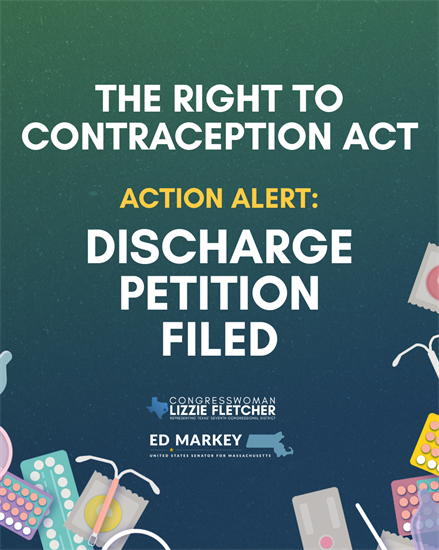
This week, I filed a discharge petition to force a House floor vote on the Right to Contraception Act. As I’ve written to you in the past, a discharge petition is a legislative tool used that allows a majority of members to force a bill to the floor for a vote by the full chamber, even if the Speaker of the House, who is in charge of what is brought to the floor, opposes it. Contraception is essential healthcare. And this effort comes as the Trump administration continues to target family planning resources, including recent funding cuts to Title X, the country’s only federal program dedicated to providing domestic family planning services for people with low incomes, these actions violate the autonomy and right to privacy of Americans that the Supreme Court recognized in Griswold v. Connecticut. Our own state of Texas is one of seven states that allows pharmacists to refuse to fill birth control prescriptions based on their personal beliefs. It is also one of 24 states that restricts minors' ability to obtain contraception without parental consent. And after a federal court ruling, Texas is the only state where Title X-funded clinics cannot provide confidential birth control to minors without parental consent.
I am grateful to my House Democratic colleagues–198 of them and counting!–who have joined my petition this week. I look forward to continuing my effort to bring this widely supported legislation to the floor for a vote. |
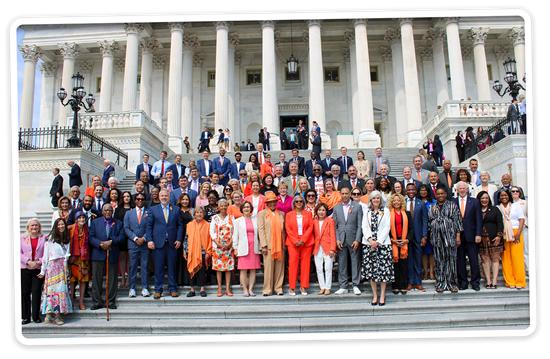
This week, I cosponsored a resolution expressing support for the designation of June 5, 2026, as "National Gun Violence Awareness Day" and June 2026 as "National Gun Violence Awareness Month” (H.Res.1342). I also joined my Democratic colleagues on the House steps in wearing orange in recognition of Gun Violence Awareness Month and to promote awareness of gun violence. For far too long, we have witnessed devastating attacks on innocent people in communities across our state and our country. Our neighbors continue to ask why this happens and what we can do to make our communities safer. I am a member of the House Gun Violence Prevention Task Force and I remain committed to working with my colleagues in Congress to pass common-sense gun safety laws to keep Americans safe. This Congress, I have cosponsored several pieces of legislation that take meaningful and necessary steps to make our community and communities across the country safer from the threat of gun violence, including the Assault Weapons Ban of 2025 (H.R. 3115), to regulate assault weapons; Ethan’s Law (H.R. 1564), to ensure guns are stored safely and securely; and the Enhanced Background Checks Act of 2025 (H.R. 3868) to extend the waiting period for gun sales if a federal background check is still pending. |
This week, I also cosponsored the 761st Tank Battalion Congressional Gold Medal Act (H.R. 1628) to award a Congressional Gold Medal to the 761st Tank Battalion, collectively, in recognition of their crucial role in the success of Allied forces in Europe in World War II and for the example they set as the first Black soldiers to go to war as part of an American armored unit.
I also joined my colleagues in sending the following letters to Congressional leaders and Trump administration officials: - a letter to Speaker of the House Mike Johnson, House Minority Leader Hakeem Jeffries and Senate Majority Leader John Thune and Senate Minority Leader Chuck Schumer expressing concern regarding the establishment of the bicameral, anti-Muslim “Sharia-Free America Caucus,” opposing religious discrimination, and keeping hateful, anti-Muslim legislation from the House floor;
- a letter to Health and Human Services Secretary Robert F. Kennedy Jr. expressing concern about the harms of crisis pregnancy centers to people seeking objective, medically sound reproductive healthcare in light of the announcement of Moms.gov, a new website to offer guidance and information to expectant mothers that features information about crisis pregnancy centers. And underscores that the U.S. Department of Health and Human Services has a responsibility to provide such information, as well as asking critical questions about patient data and privacy;
- a letter to Secretary of State Marco Rubio and Centers for Disease Control and Prevention Acting Director Jay Bhattacharya demanding answers on the failure to detect and contain the rapidly worsening Ebola outbreak in the Democratic Republic of the Congo and Uganda and emphasizes the need for the United States to restore and expand assistance to help contain the outbreak; and
- a letter to Speaker of the House Mike Johnson urging him to remove a provision from the FY26 surface transportation bill, the BUILD America 250 Act, that, if enacted, would shield rideshare companies like Uber and Lyft from liability when passengers are sexually assaulted, injured, or killed.
|
On Tuesday, the Energy & Commerce Subcommittee on Energy held a hearing on reforming the permitting system for nuclear energy projects. For advanced nuclear to succeed, developers need clear rules of the road and freedom from politicized regulatory process. I worked with the Committee to pass the bipartisan ADVANCE Act last Congress–legislation that helped spark the nuclear renaissance now taking place across the country and at home in Texas. But rather than build on that bipartisan success, President Trump has launched yet another partisan attack on the Nuclear Regulatory Commission (NRC), undermining the independence of a key oversight body. President Trump also issued executive orders demanding that the Department of Energy (DOE) approve test reactors at an aggressive pace. I support streamlining federal permitting for energy generation and infrastructure, but that process must be insulated from politics, and the NRC must remain independent.
On Wednesday, the Energy & Commerce’s Subcommittee on Health held a legislative hearing on healthcare price transparency bills. We are in a healthcare affordability crisis, and price transparency is an important tool for lowering costs and giving consumers the information they need to make informed decisions. But I also used my time to talk about the ways this Congress has driven up healthcare costs by cutting Medicaid and eliminating the Affordable Care Act Enhanced Premium Tax Credits. You can watch my full remarks below. |
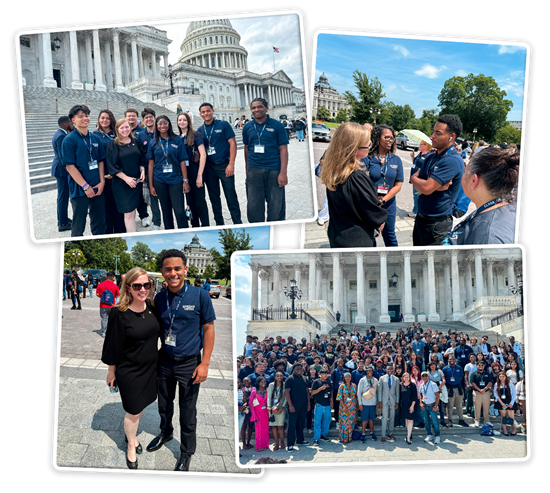
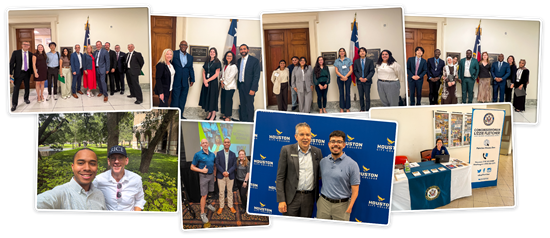
This week, I was glad to meet with students and teachers from Houston participating in the CloseUp Washington program. Using the city as a living classroom, Close Up Washington brings high school students to the Capitol to inspire and empower them to become active participants in our democracy. I still remember my own CloseUp trip from my junior year in high school, and I am always glad to welcome them. This year’s group was too big to fit in my office, so I joined Congressman Christian Menefee in welcoming them on the House steps. |
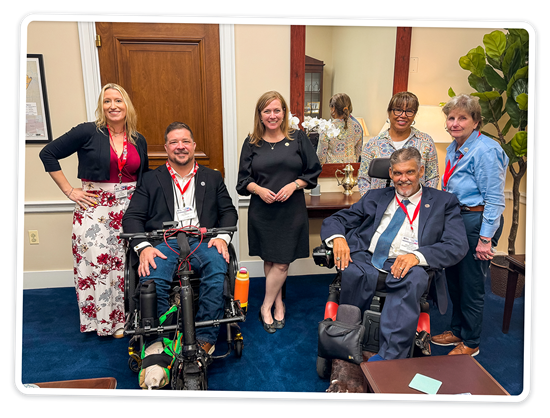
Back in the office, I met with Texans with the Paralyzed Veterans of America Lone Star Chapter during their advocacy day to discuss their experiences with the VA as well as improving access to air travel, expanding disability access, improving access to Social Security benefits, and increasing employment prospects for veterans with disabilities. |
In Washington, Team TX-07 once again participated in nearly two dozen meetings with constituents and groups advocating on their behalf, including the Greater Houston Builders Association, Kidney Care Partners, Refugee Council USA, and the National Network for Arab American Communities, pictured below.
Back home in the district, our team was out and about across the district, visiting community partners and attending community events, including the Parent Teacher Collaborative, the Montrose Center, Rice University, Super Neighborhood and Civic Club meetings in the Heights and the West End; the DAV Women Veterans Celebration, a launch for Houston City College and Space Center Houston's new partnership, as well as hosting another successful constituent services pop-up at the West Gray Metropolitan Multi-Service Center. |
As I’ve written in previous weeks, the Department of Justice (DOJ) recently announced a $1.8 billion fund for President Trump’s allies. The DOJ plans to draw from the Treasury’s Judgment Fund, a taxpayer-funded account for settled government claims, to compensate people who claim the Biden administration targeted them. Eligible recipients could include Trump political allies, Trump affiliated entities, lawmakers, and the nearly 1,600 defendants charged in connection with January 6. Under the terms of the settlement, President Trump would control a five-member commission with authority to approve awards, the power to fire members without cause, and the ability to keep the recipients’ identities secret—leaving the public in the dark about who gets paid and how much. The settlement would also shield President Trump, his family, and his family’s businesses from any future IRS audits.
A federal judge in Virginia has blocked any payouts or further work to establish the fund while legal challenges move through the courts. This case is not closed. And I want to hear from you: |
|
|
| |
Should President Trump control a taxpayer-funded fund to compensate his political allies with no disclosure or accountability?
|
|
|
|
| |
|
|
|
|
| |
|
|
|
|
| |
|
|
|
|
|
|
|
Submit survey to sign up for updates.*
|
|
The House will be out of session next week as the country celebrates our newest national holiday: Juneteenth. Of course, it’s not new in Texas. It originates in Texas, in our part of Texas. I was so proud to be a small part of the effort to make Juneteenth a federal holiday, introducing a bill with Congresswoman Sheila Jackson Lee in my first term in office and seeing President Biden sign it into law in my second term.
I look forward to celebrating Juneteenth and all it represents, including freedom, progress, and hope. It is important that we know and learn from our history—all of it—and that we do our part now to honor and continue the work of those who fought for freedom, progress, and the promise of America for all of its citizens. |
As always, I am proud to represent you and I am here to help you. Please call my office at (713) 353-8680 or (202) 225-2571 or email here at any time to ask for assistance or share your thoughts. I look forward to hearing from you. Best wishes, |
|